The assessment
VitoCheck uses electrical impedance tomography (EIT). The system processes impedance measurements into model-derived outputs.
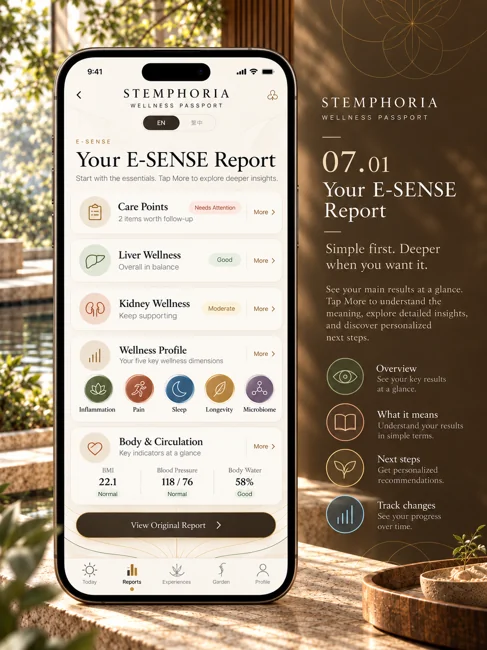
Stemphoria is exploring an adult wellness pathway with E-SENSE VitoCheck. A staff-guided visit pairs an assessment with a report walkthrough and a plan for follow-up in the Wellness Passport.
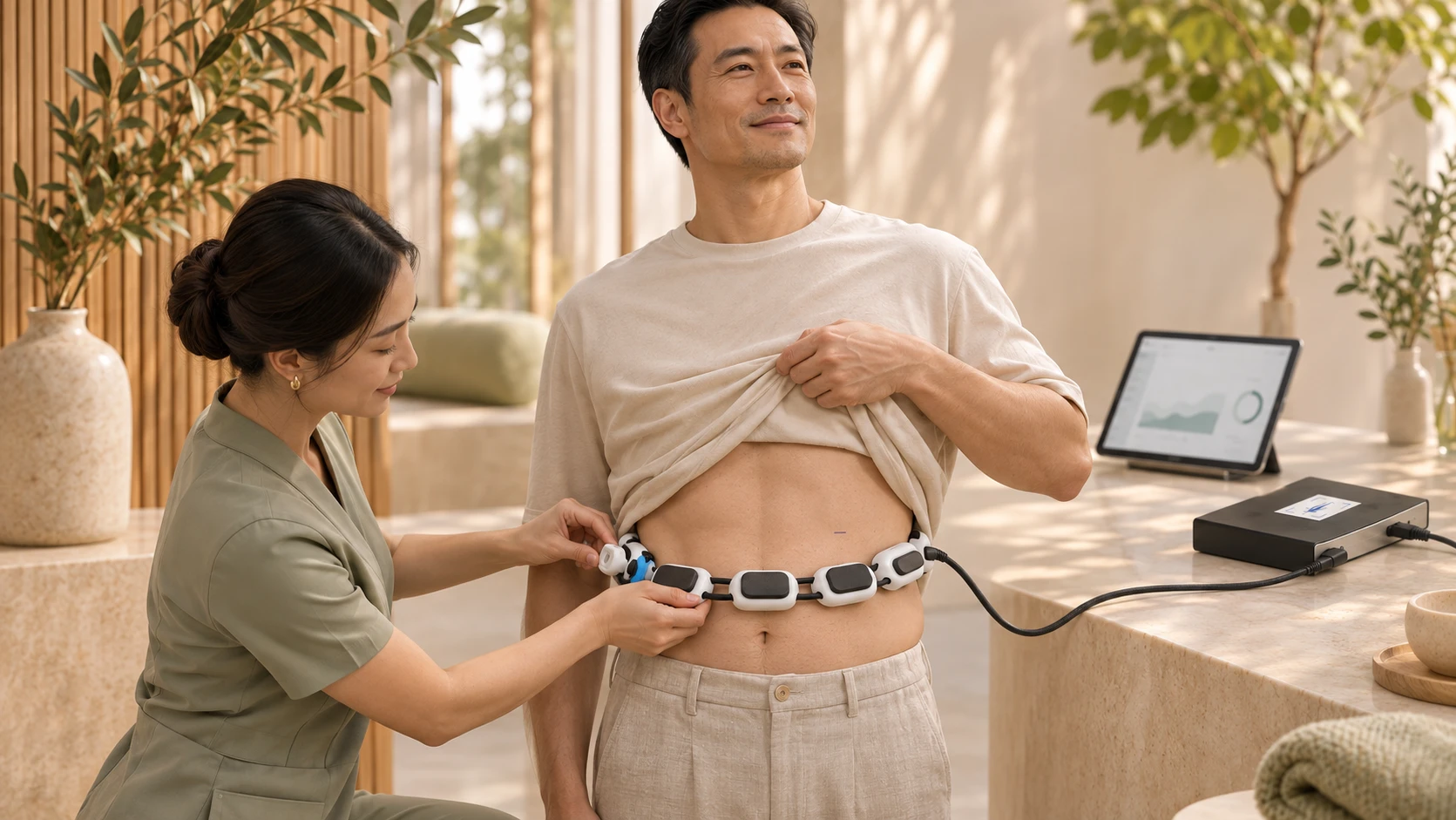
VitoCheck uses electrical impedance tomography (EIT). The system processes impedance measurements into model-derived outputs.
The report can include separate liver and kidney wellness scores. Review what each score represents and bring clinical questions to a qualified healthcare professional.
Use the Wellness Passport to keep track of agreed actions, questions and follow-up dates. Timing and availability depend on the participating programme.
Kat Lai’s work with Dr. Russell Chan and E-SENSE grew out of a practical question for community wellness: how can an adult turn an assessment into a useful next step? Stemphoria’s role is to design the guided visit, make the report easier to understand and carry the follow-up into Wellness Passport.
Dr. Russell Chan, the lead inventor of E-SENSE’s core technology, and his team developed a portable, non-invasive approach based on electrical impedance tomography (EIT). Surface electrodes collect electrical measurements, and software estimates patterns of conductivity inside the body without ionising radiation. The team explores several organ applications. Stemphoria’s proposed pathway starts with the liver, then the kidneys.
These 2025 IEEE EMBC conference papers describe liver and kidney applications of EIT. The papers cover the systems and study populations evaluated by the authors.
Research & Recognition